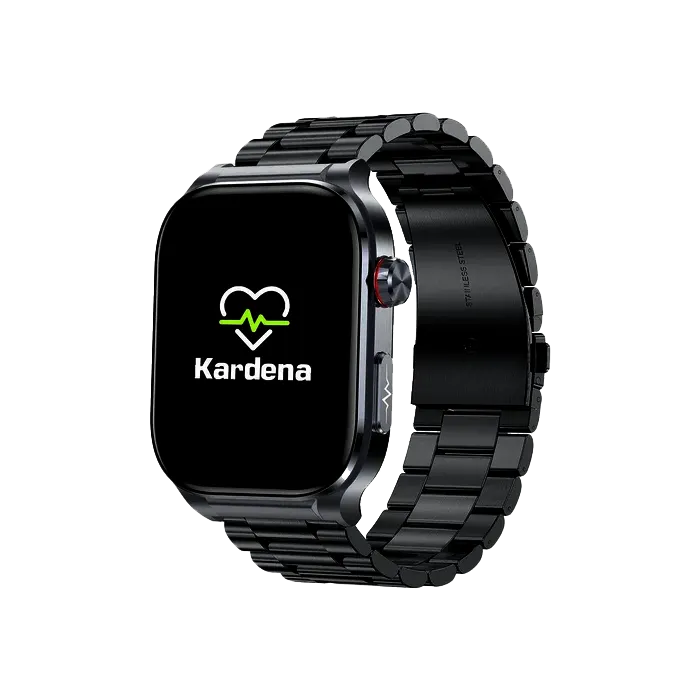
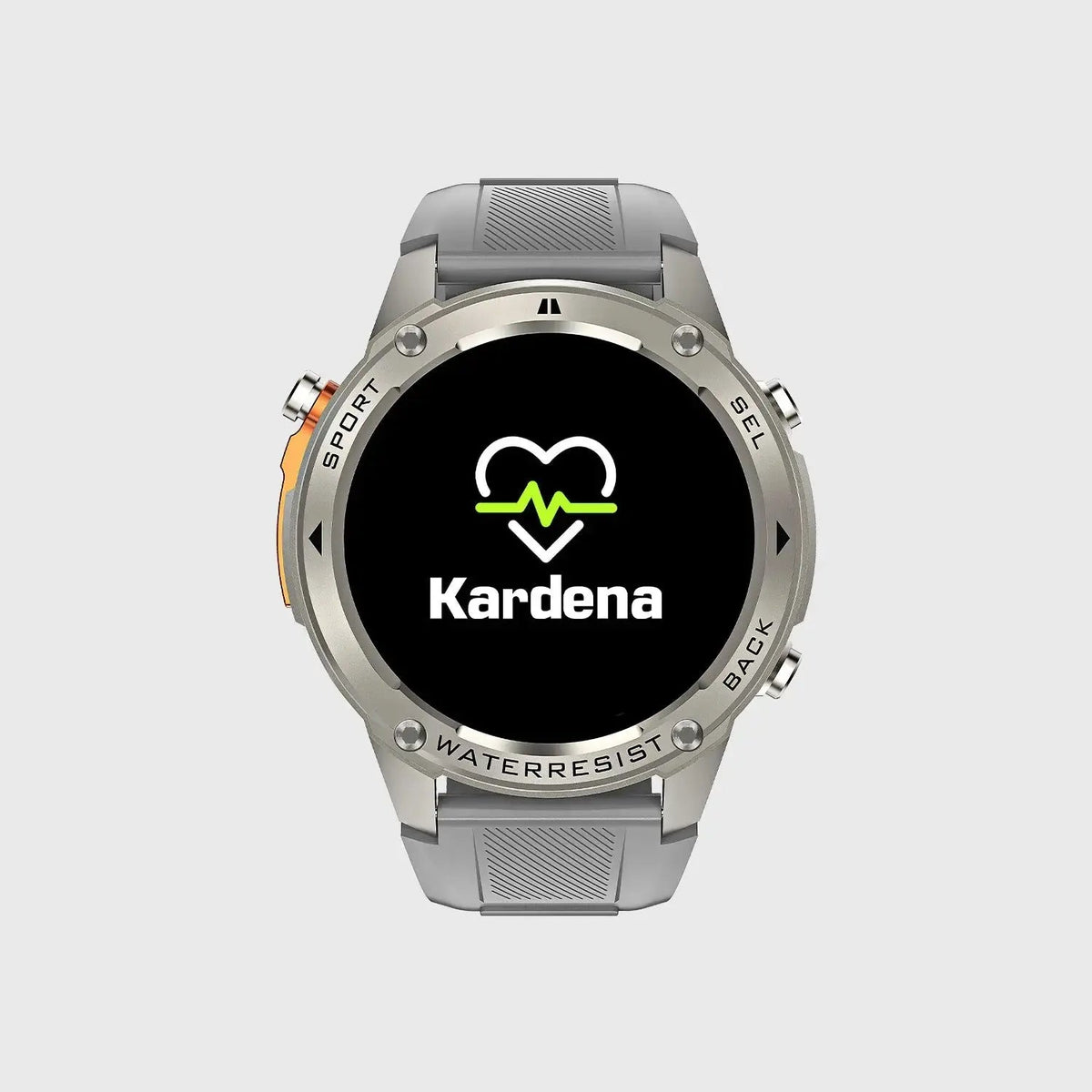
Every cheap device has a pedometer these days. What distinguishes Kardena health watches is their focus on situations that actually count – heart palpitations at 2 a.m., blood pressure readings that never appear when they should at the doctor's office, or a long day of hiking when you want to know where you stand. This page explains what the three current models actually achieve, where their limits lie, and which one fits which situation.
What health watches can do in everyday life
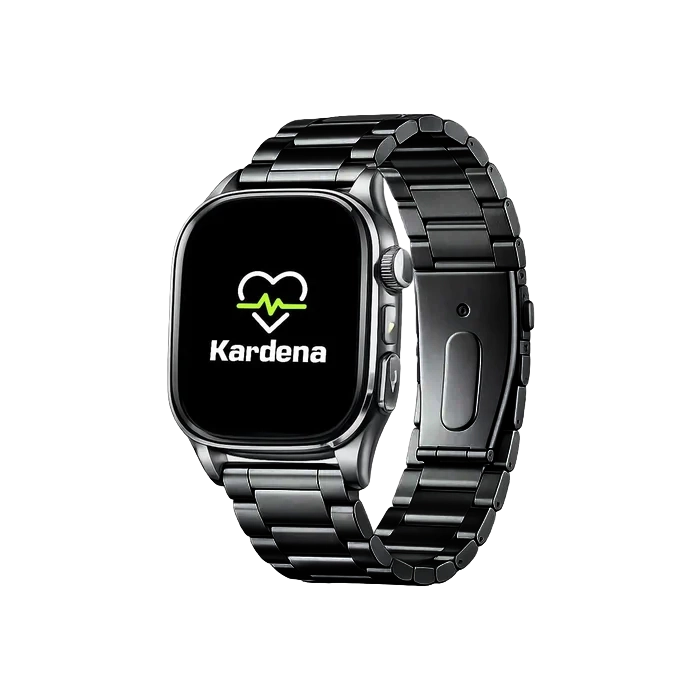
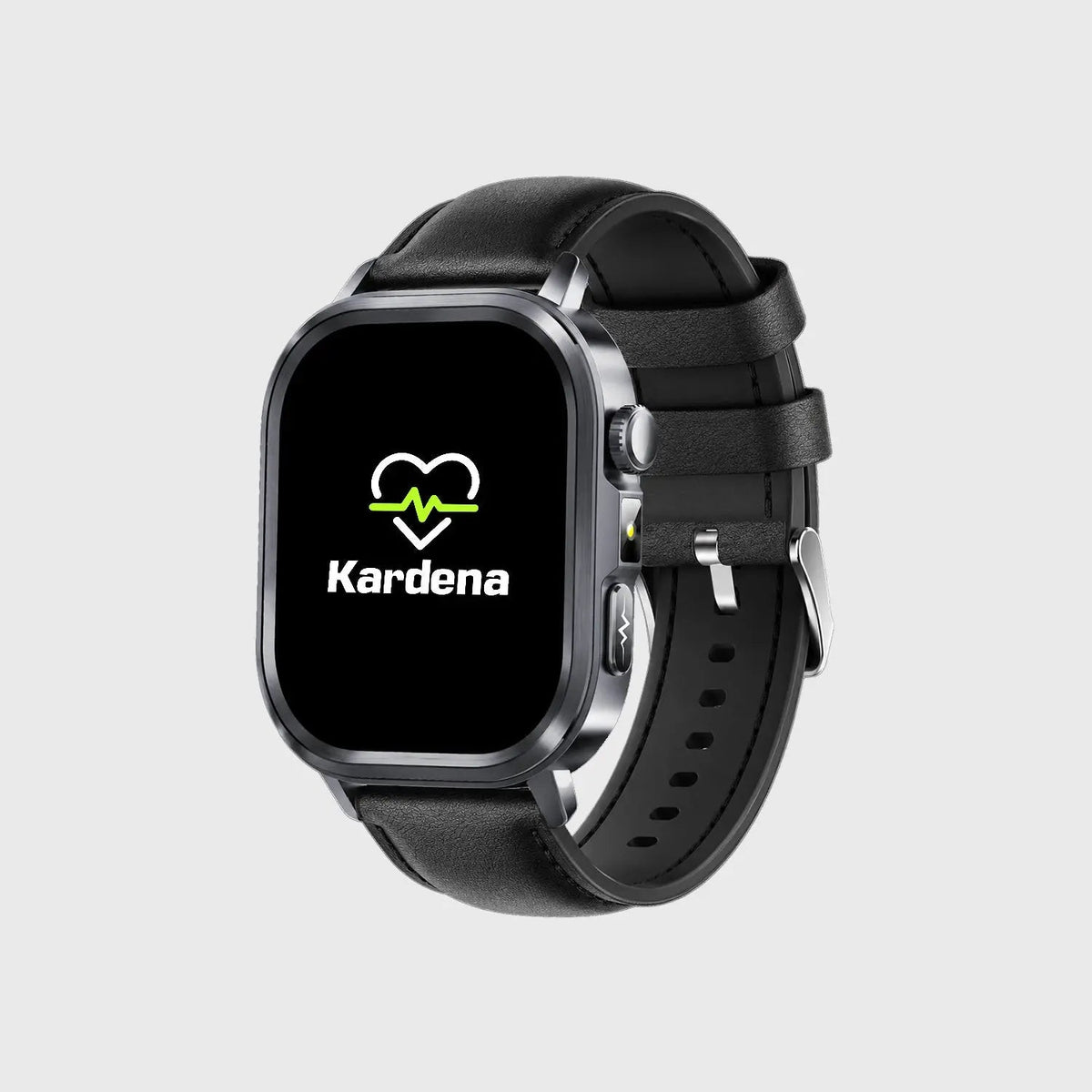
All three models automatically record heart rate and sleep phases. This requires no operation. For people with high blood pressure, the CARE Pro 6 and CARE Pro 5 offer wrist-based blood pressure estimation as a guidance tool between doctor visits — not a clinical measuring device, but a trend value that makes patterns visible over weeks. The CARE GPS does not measure blood pressure; instead, it relies on robust outdoor suitability and integrated GPS.
The SOS function works on all three models via Bluetooth with a smartphone. No alarm can be triggered without a smartphone connection — this applies to the CARE Pro 6, CARE Pro 5, and CARE GPS alike. The difference lies elsewhere: the CARE GPS has its own GPS chip in the housing. The Pro 6 and Pro 5 transmit the location via the connected phone.
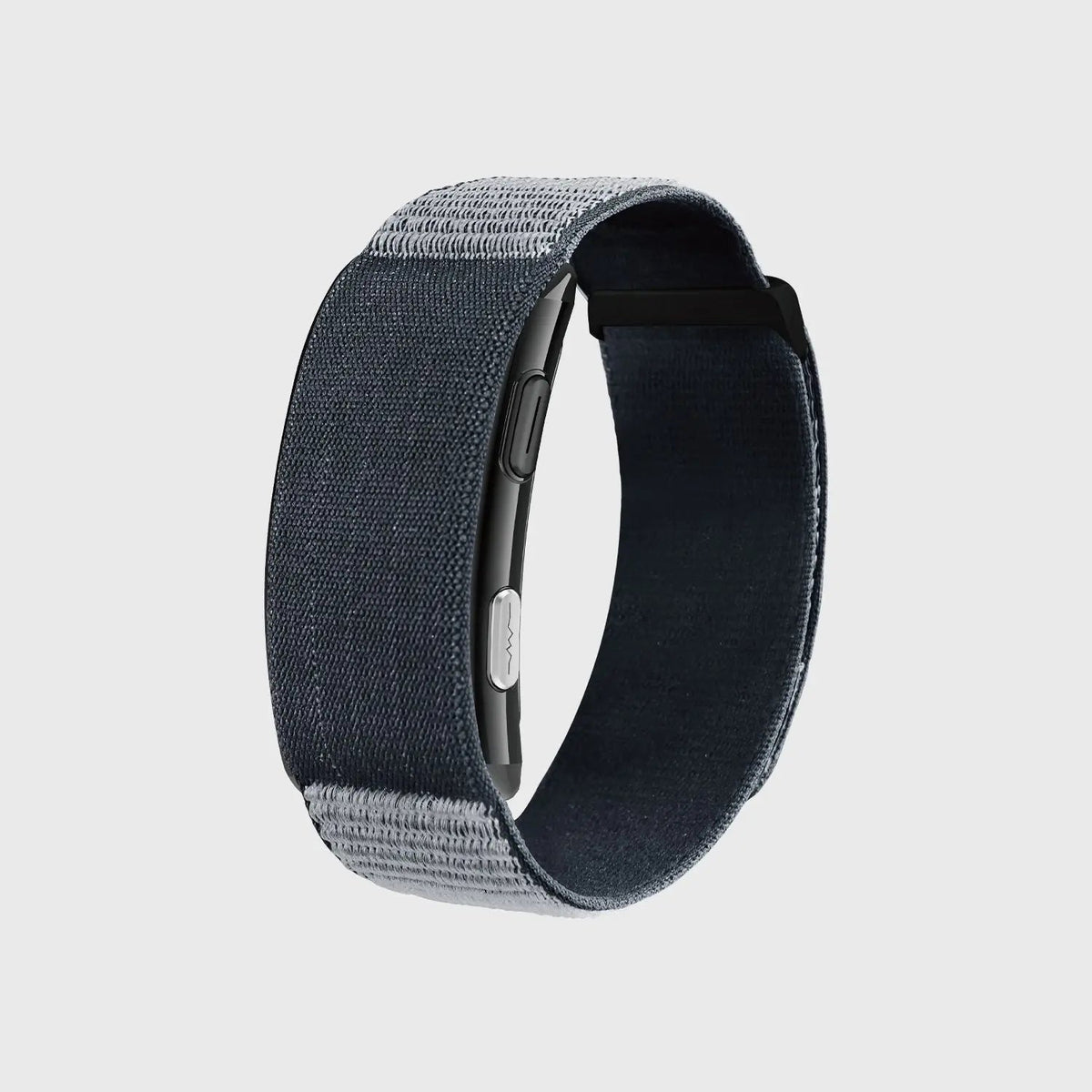
CARE Pro 6
ECG, blood pressure estimation, SpO₂, sleep, care-sharing. SOS to up to 5 contacts. ~1 week battery. IP67.
CARE Pro 5
ECG, HRV, AI analysis, blood pressure estimation, SpO₂. SOS to up to 3 contacts. ~7 days battery. IP68.
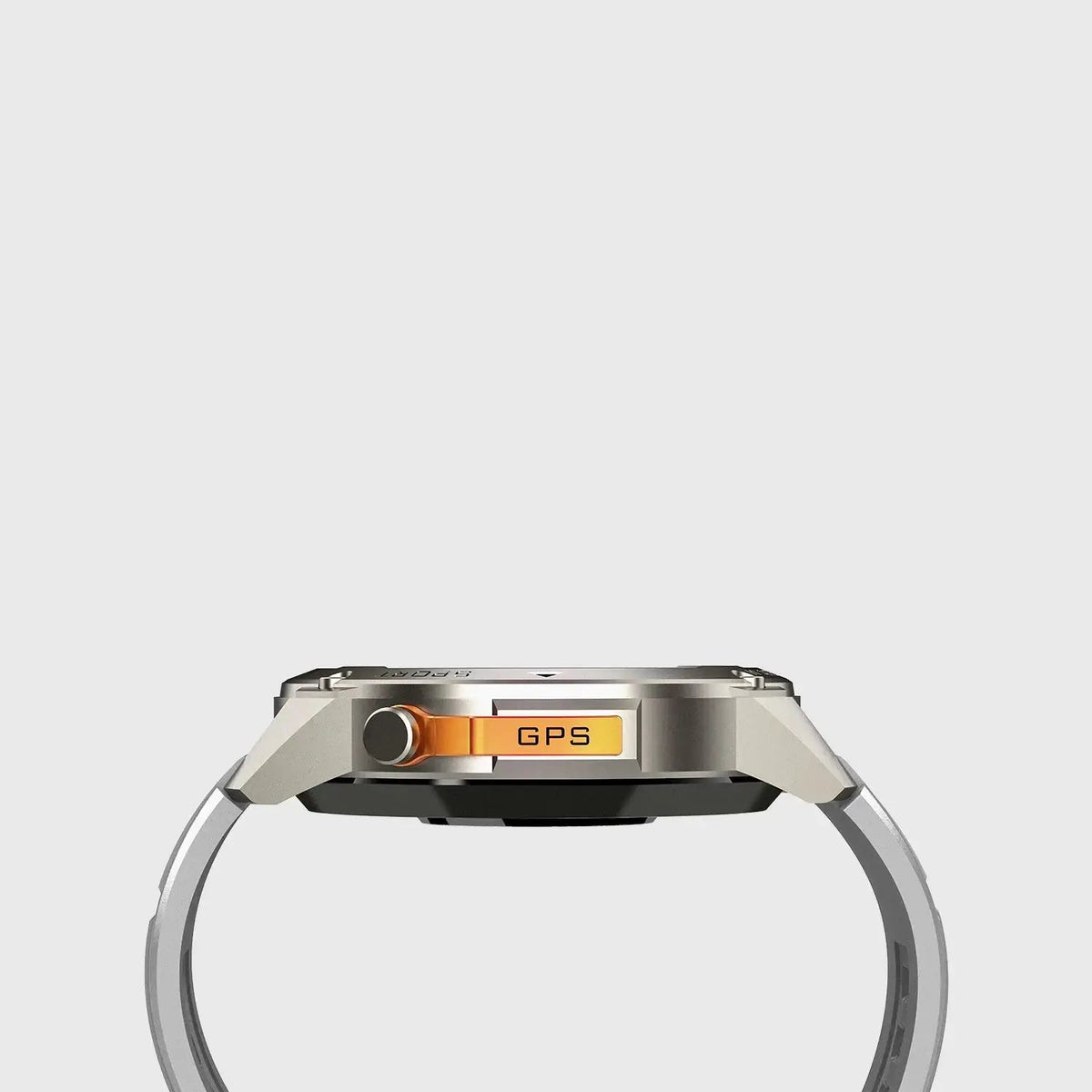
CARE GPS
Integrated dual-band GPS, barometric altimeter, 170+ sport modes. SOS to 1 contact. 6–18 days battery. IP69K.
Model comparison: Which health watch suits whom?
| Feature | CARE Pro 6 | CARE Pro 5 | CARE GPS |
|---|---|---|---|
| ECG recording | Yes | Yes | No |
| Blood pressure estimation | Yes (reference value) | Yes (reference value) | No |
| Integrated GPS | No (via smartphone) | No (via smartphone) | Yes, dual-band |
| SOS contacts | Up to 5 | Up to 3 | 1 contact |
| Water resistance | IP67 | IP68 | IP69K / 5 ATM |
| Battery life | ~1 week | ~7 days | 6–18 days |
| Suitable for | Everyday life, seniors, large display, care function | Health monitoring, HRV, AI analysis | Outdoor, hiking, sports, robust use |
Why ease of use is more important than the sensor list
Many smartwatches offer more technically. But a watch that requires navigating three sub-menus to read your pulse will not be worn after two weeks. All three Kardena models feature large font sizes and clearly labelled buttons.
For those who want to process their data further: the CARE Pro 6 and Pro 5 use the G Band and H Band apps, which can be connected to Apple Health and Google Fit. The CARE GPS works with the GloryFitPro app, which also offers Strava integration. If you don't want that, you don't have to use it. All basic functions run directly on the watch.
FAQ about Kardena health watches
Does a health watch measure blood pressure with medical accuracy?
No. The readings from the CARE Pro 6 and Pro 5 are reference and trend values — helpful for identifying patterns over weeks, not for medical decisions. The CARE GPS does not record blood pressure.
Does the SOS function work without a smartphone?
No. All three models require an active Bluetooth connection to a smartphone. No alarm can be triggered without a paired phone nearby.
Which model has integrated GPS?
Only the CARE GPS has its own GPS chip (dual-band, with Galileo, GLONASS, and other systems). The Pro 6 and Pro 5 use the connected smartphone's GPS for location transmission.
Do I have to take off the watch to charge it at night?
Not necessary. All three models last several days. Those who charge during the day wear the watch through the night — and do not interrupt sleep tracking.