

Mrs S. is 74 and lives on her own. ‘I manage well,’ she says. ‘But sometimes I think – what if something happened?’
It’s a quiet thought, and one that many older people living alone share. It doesn’t mean something is wrong. It simply means you’d like to feel prepared.
The good news: feeling safe at home isn’t about big changes or giving up your independence. It’s about a few simple steps that give you – and your family – peace of mind.
How can you feel safe living alone? The short answer
Feeling safe when living alone in later life comes from three things: preparation, a clear overview of how you’re doing, and simple support you can rely on. It’s not about avoiding every risk – it’s about knowing you can handle things calmly if something does happen.
Why feeling safe is about confidence, not control
Safety isn’t only about precautions. It’s mostly a feeling – the confidence that you can manage your day and get help if you need it.
That confidence is built on three things:
- Knowing how you’re doing – physically and in your daily life
- Being able to reach help – quickly and easily
- A steady routine – so your days feel familiar and predictable
Safety doesn’t mean control. It means having confidence in your own everyday life.
The three pillars of everyday safety
1. Awareness: knowing how you feel
Paying attention to your sleep, energy and wellbeing helps you notice changes early – before they become a worry.
2. Connection: being reachable in an emergency
Knowing that family, friends or neighbours can be reached at any time – and can reach you – is one of the biggest sources of reassurance.
3. Routine: reliable daily habits
Regular mealtimes, a daily walk or a fixed time to phone a loved one give your day structure. They also mean someone will notice quickly if something is out of the ordinary.
The small moments people often underestimate
When we think about safety, we often picture big emergencies. But in everyday life, it’s usually the small moments that make us feel unsure:
- Feeling dizzy when standing up
- Feeling unsteady on your feet
- Feeling unwell for no clear reason
These moments are common and often harmless. But when you live alone, it’s reassuring to know what you would do if one of them turned into something more.
If you notice changes like these more often, it’s a good idea to mention them to your GP.
Quick self-check: how safe do you feel at home?
Ask yourself:
- Do I sometimes feel unsure or unsteady?
- Would I like to be reachable more easily in an emergency?
- Would I like a better overview of how I’m doing?
If you answered ‘yes’ to one or more, the simple plan below is a good place to start.
A simple 7-day plan to feel safer at home
Days 1–2: choose your emergency contacts
- Pick two or three people you trust – family, a friend or a neighbour.
- Write their numbers down and keep the list somewhere easy to find, such as on the fridge or by the phone.
- Save the numbers in your mobile as well, so you can call them quickly.
Days 3–4: settle into a steady routine
- Get up, eat and go to bed at roughly the same times each day.
- Agree on a daily check-in with someone close – a short call or message is enough.
- Keep your phone within reach, even at home.
Days 5–7: bring in support
- Make your home safer: good lighting on stairs and in hallways, and no loose rugs or cables to trip over.
- Consider whether a neighbour could keep a spare key.
- Look at simple tools that can help you call for help at the touch of a button.
Take the time to talk to your family about what would happen in an emergency. That conversation alone can make everyone feel safer – you included.
How technology can help you stay safe and independent
Today’s technology can support you quietly in the background, without changing how you live. Modern solutions can offer:
- SOS emergency call functions – to reach your contacts quickly when you need help
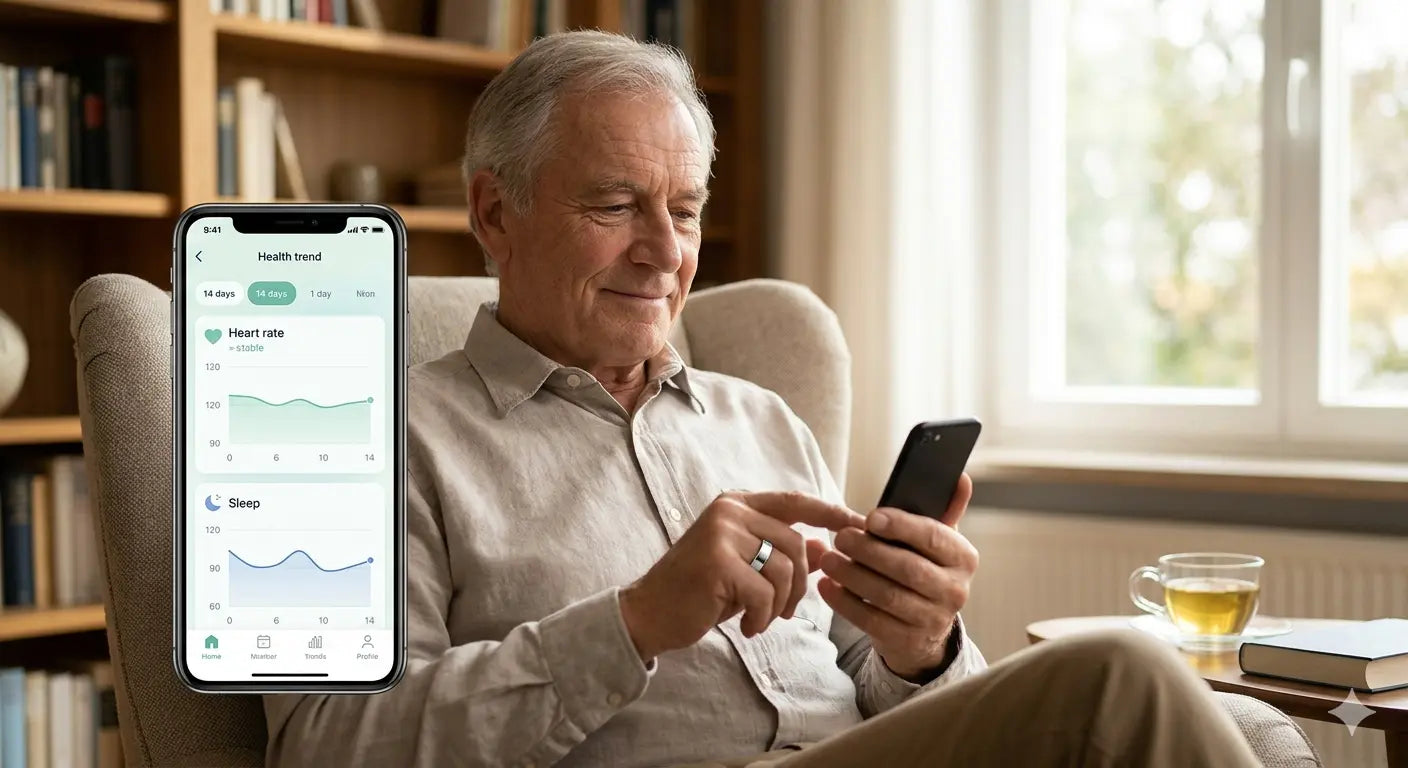
- An overview of how you’re doing – for example your sleep, heart rate and activity
- A connection to family and loved ones – so they can feel reassured too
The key thing: good solutions work in the background. They don’t get in the way of daily life – they are simply there when you need them.
Want to understand your health readings better? Read our guide to understanding your heart rate, or find out why you might feel tired all the time.
Frequently asked questions
Is it safe for older people to live alone?
Yes, many older people live alone safely and happily. The key is good preparation: emergency contacts, a steady routine, a safe home and an easy way to call for help.
How can I stay independent while feeling safe?
Independence and safety go hand in hand. Small steps – a daily check-in, a list of emergency contacts and simple technology such as an SOS watch – let you live your own way while knowing help is close by.
How can my family know I’m all right?
Agree a simple daily check-in, such as a phone call or a message at a set time. Technology with SOS functions can also give your family extra peace of mind.
Our recommendation
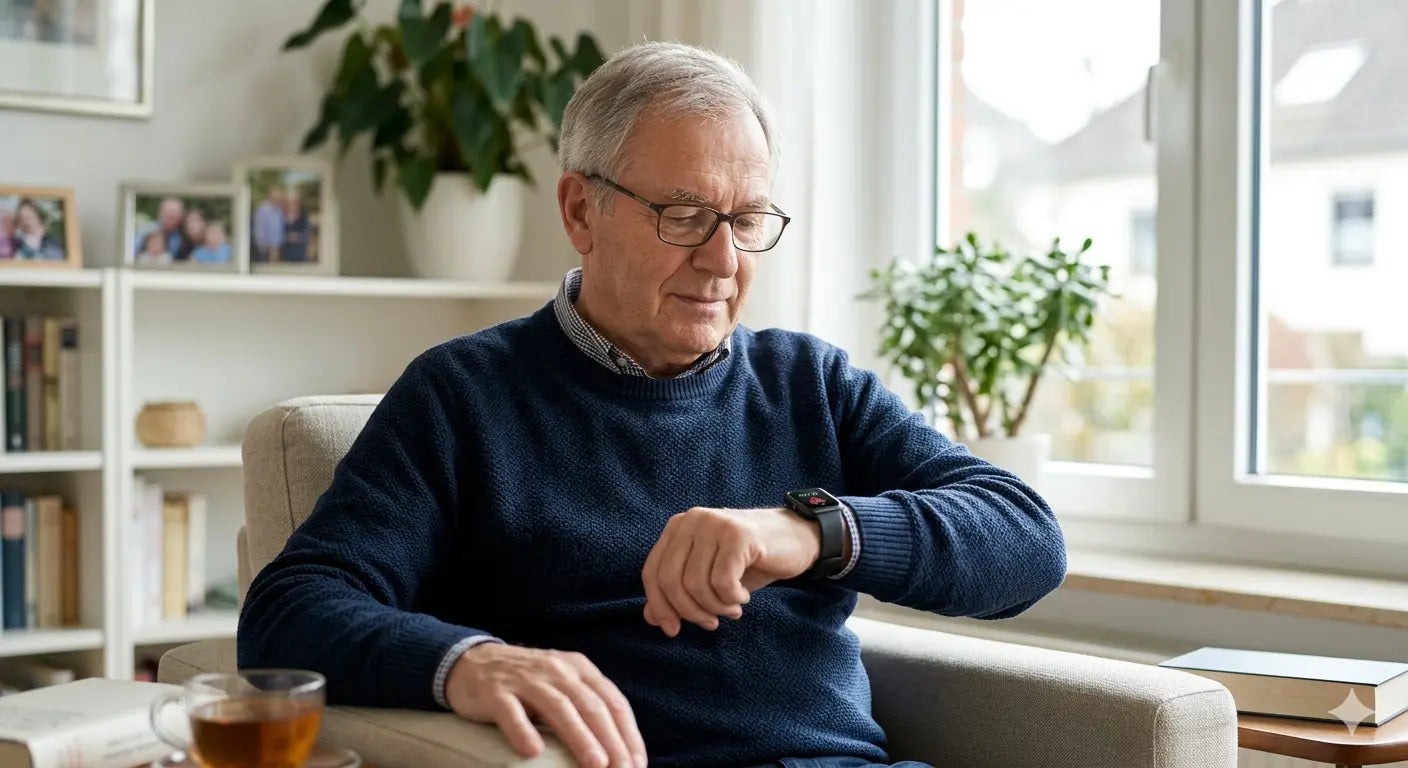
If you’d like to feel safer day to day without giving up your independence, a simple health watch with an SOS function can be a helpful source of support – easy to use and always on your wrist.
Discover SOS watches for more safety in everyday life
Please note: our watches are designed for everyday support and are not a medical system. In an emergency, always call 999.
1 comment
Deutz
Gibt es einfache Uhren die man gleich ohne Einstellungen tragen kann?
Gibt es einfache Uhren die man gleich ohne Einstellungen tragen kann?